
Domestic Violence Awareness Month: How Awareness Leads to Healing and Hope
October Is Domestic Violence Awareness Month
Every October, communities across the country unite to observe Domestic Violence Awareness Month (DVAM) — a time to shed light on a painful but vital topic.
At Solace Solutions Counseling and Evaluations, we believe awareness is more than just knowing the facts. It’s about understanding how domestic violence impacts every aspect of a person’s life — emotionally, mentally, and physically — and learning how to create a culture of safety, compassion, and support.
Domestic violence affects 1 in 3 women and 1 in 4 men in the U.S. during their lifetime. But behind those statistics are real people: neighbors, coworkers, friends, and family members — many of whom suffer in silence.
This month, we honor survivors, remember those lost, and reaffirm our shared responsibility to break the cycle of abuse and promote healing in our homes and communities.
What Domestic Violence Really Looks Like
When most people think of domestic violence, they picture physical assault. While that is a serious and visible form, abuse can take many other shapes — often subtle, invisible, and deeply psychological.
Here are some ways abuse can manifest beyond the physical:
* Emotional abuse: Constant criticism, humiliation, or gaslighting that makes a person doubt their reality or self-worth.
* Verbal abuse: Yelling, name-calling, or threats that instill fear or shame.
* Financial control: Restricting access to money, monitoring spending, or sabotaging employment.
* Social isolation: Controlling who someone sees, where they go, or what they do — slowly cutting them off from friends and family.
* Digital abuse: Tracking phones, reading messages, or monitoring social media.
* Coercive control: Using fear, guilt, or manipulation to dominate decisions.
These behaviors often begin subtly and escalate over time, leaving survivors feeling trapped and powerless.
Abuse is not about anger — it’s about control. Recognizing this helps shift the focus from “Why don’t they leave?” to “Why does someone choose to harm?”
Learn more about warning signs here: National Domestic Violence Hotline – Red Flags.
Why People Stay — and Why They Need Compassion, Not Judgment
Leaving an abusive relationship isn’t easy. Survivors often face fear, shame, financial dependency, or concern for their children’s safety. Some worry they won’t be believed or that their abuser will retaliate.
It’s important to remember: leaving is a process, not a single event. Survivors often make multiple attempts before they can safely leave for good.
What they need most is understanding, validation, and support — not pressure or judgment. When someone feels seen and believed, they’re more likely to seek help.
If someone confides in you, try saying:
“I believe you.”
“You don’t deserve this.”
“You’re not alone.”
“I’m here to support you whenever you’re ready.”
Healing After Abuse: The Journey Forward
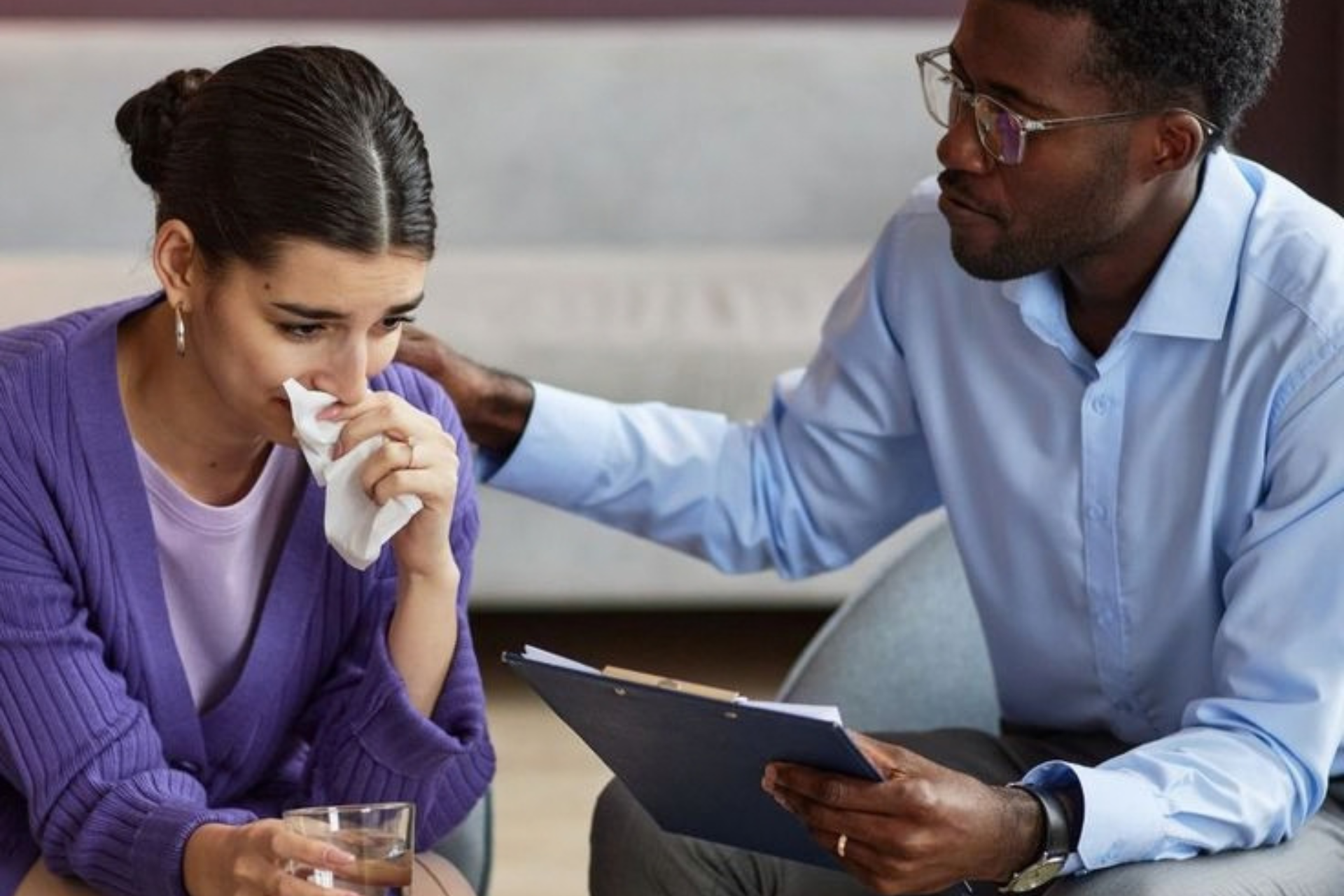
Domestic violence often leaves deep emotional scars that linger long after physical wounds heal. Survivors may struggle with anxiety, depression, low self-esteem, trust issues, or post-traumatic stress. But healing is possible — and therapy can be a powerful part of that journey.
At Solace Solutions Counseling, our therapists use trauma-informed approaches to help clients rebuild their sense of safety, self-worth, and hope.
Here are some evidence-based ways therapy supports recovery:
* Trauma Processing (EMDR): EMDR (Eye Movement Desensitization and Reprocessing Therapy) helps survivors process traumatic memories safely and reduce their emotional intensity. Our therapist Brielle is trained in EMDR, contact us to find out more about it.
* Reconnecting Mind and Body: Abuse often causes survivors to disconnect from their bodies as a survival mechanism. Mindfulness, grounding, and somatic awareness can help restore that connection.
* Boundaries and Empowerment: Learning to set healthy boundaries is key to preventing re-victimization and fostering confidence.
* Reclaiming Identity: Survivors work on rediscovering who they are — separate from the abuse — and developing new, positive self-beliefs.
* Building Support Networks: Therapy helps survivors identify safe people and healthy community connections for continued healing.
Healing is not linear. Some days are easier than others. But every step forward — no matter how small — is progress.
How You Can Help During Domestic Violence Awareness Month
Everyone can play a role in supporting survivors and spreading awareness. Here’s how you can make a difference this October (and beyond):
1. Start a conversation. Talking openly about domestic violence helps break the silence and stigma.
2. Educate yourself. Learn the warning signs, resources, and safety planning steps.
3. Share resources. Post hotline numbers and links on social media or at your workplace.
4. Wear purple. It’s the color of domestic violence awareness — a simple yet powerful show of solidarity.
5. Support organizations. Donate to local shelters, crisis centers, or survivor advocacy programs.
6. Be a safe space. Let friends and clients know your office or home is a judgment-free place to talk.
Campaigns like #ThisIsDV and #1Thing remind us that small actions can lead to big change. One conversation can save a life.
Resources for Help and Healing
If you or someone you know is experiencing abuse, help is available. You are not alone.
24/7 Support:
* National Domestic Violence Hotline: 1-800-799-SAFE (7233)
* Online chat: www.thehotline.org
* Text: “START” to 88788
Colorado Resources:
* TESSA Colorado Springs: www.tessacs.org
* National Coalition Against Domestic Violence: www.ncadv.org
For ongoing emotional healing, therapy can be a safe place to process trauma, rebuild confidence, and move forward at your own pace.
Learn more about our team and how we support survivors here: Solace Counseling.
Hope Lives Here
Domestic Violence Awareness Month is more than an annual observance — it’s a call to empathy, education, and collective healing. Every person deserves to feel safe, valued, and loved in their relationships.
At Solace Solutions Counseling and Evaluations, our team is dedicated to helping clients heal their mind, body, and spirit so they can live their best life — free from fear and full of hope.
If you or someone you care about needs support, contact us today. Together, we can take the next step toward safety, healing, and peace.
External Links:
* National Domestic Violence Hotline
* Domestic Violence Awareness Project
* We Shall Prevail: DVAM Overview
Internal Links: